
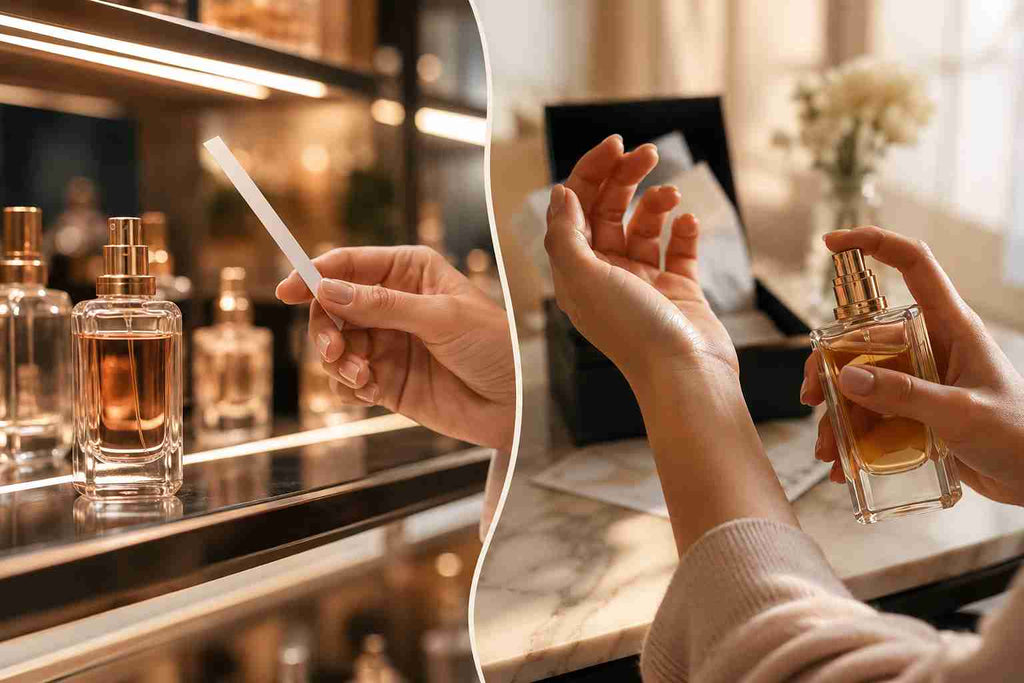
Why Your New Perfume Smells Different Than the Tester: The Truth Behind Every Spray
Why Your New Perfume Smells Different Than the Tester
Have you ever fallen in love with a fragrance at a store, only to bring it home and feel like it smells different? You're not alone. This is one of the most common questions among perfume lovers.
Many people assume they received a fake product or a bad batch, but in most cases, that's not true. The difference usually comes from how fragrances react to the environment, your skin, and even your nose.
If you're searching for a Long Lasting Perfume, understanding why a Perfume Tester smells different from a newly opened bottle will help you appreciate your fragrance even more.
In this guide, we'll explain the real reasons behind this difference and share expert Perfume Tips to help you enjoy your fragrance at its best.
Is the Tester Different from the Actual Perfume?
The simple answer is No.
A genuine Perfume Tester and the retail bottle usually contain the same fragrance formula. Reputable brands produce testers so customers can experience the exact scent before buying.
The only differences are usually:
- Simpler packaging
- No decorative cap (sometimes)
- "Tester" printed on the bottle
- Not intended for resale
The liquid inside is generally identical.
So why does your new bottle smell different?
Let's explore the reasons.
1. Your New Bottle Needs Time to Settle
Many perfumes travel long distances before reaching customers. During transportation, bottles experience changing temperatures, vibrations, and pressure changes.
Once you receive your perfume:
- Let it rest for 24–48 hours.
- Store it in a cool, dry place.
- Avoid shaking the bottle.
After settling, many fragrances begin smelling more balanced and closer to what you experienced in the store.
2. Your Nose Changes Throughout the Day
Your sense of smell isn't constant.
Factors that affect it include:
- Weather
- Allergies
- Stress
- Fatigue
- Strong surrounding odors
- Previous perfumes you've worn
At the perfume counter, your nose may have been fresh. At home, after smelling food, coffee, or other scents, your perception changes.
This is completely normal.
3. Perfume on Skin Is Different for Everyone
One of the biggest reasons fragrances smell different is Perfume on Skin.
Your skin has unique characteristics, including:
- Natural oils
- pH level
- Body temperature
- Hydration
- Skin chemistry
These factors influence how the fragrance develops.
The exact same perfume can smell:
- Sweeter on one person
- Fresher on another
- More woody on someone else
That's why perfumes become personal signatures.
4. Testers Have Been Open for Longer
Many store testers have already been sprayed hundreds of times.
When a bottle has been open for some time:
- Alcohol evaporates slightly.
- The scent can become smoother.
- Some notes may feel softer or richer.
A brand-new bottle often smells sharper during the first few sprays because it hasn't had the same exposure to air.
5. The First Spray Isn't Always the Best Representation
If your perfume has been sitting unused for weeks or months, the liquid in the spray tube may not perfectly represent the fragrance.
Spray 3–5 times before judging the scent.
After those initial sprays, the perfume usually performs more consistently.
6. You're Smelling Different Fragrance Notes
Every fragrance unfolds in stages.
Top Notes
These appear immediately after spraying.
Examples include:
- Citrus
- Bergamot
- Lemon
- Orange
- Mint
These evaporate quickly.
Heart Notes
These develop after 15–45 minutes.
Common heart notes include:
- Rose
- Jasmine
- Lavender
- Fruits
- Spices
This is the true personality of the perfume.
Base Notes
These remain for several hours.
Examples include:
- Vanilla
- Musk
- Amber
- Sandalwood
- Patchouli
- Oud
When comparing a tester with a fresh spray, you may simply be smelling different Fragrance Notes at different stages.
7. Store Environment Changes Your Experience
Perfume stores are carefully designed.
The environment often includes:
- Air-conditioned rooms
- Controlled humidity
- Bright lighting
- Minimal outside odors
At home, your perfume competes with:
- Cooking smells
- Air fresheners
- Detergents
- Dust
- Outdoor pollution
These environmental factors influence how you perceive the fragrance.
8. Weather Affects Perfume Performance
Temperature changes fragrance performance dramatically.
Summer
- Fragrance projects more.
- Citrus notes feel brighter.
- Evaporation happens faster.
Winter
- Woody notes become richer.
- Sweet scents last longer.
- Projection decreases.
This directly affects Perfume Longevity.
9. Storage Makes a Difference
Improper storage can change how perfume smells over time.
Avoid storing perfumes:
- In direct sunlight
- Near windows
- Inside hot cars
- In bathrooms with steam
- Near heaters
Instead, keep your Luxury Perfume in:
- A cool place
- A dark cupboard
- Its original box
- Stable room temperature
Good storage preserves both scent quality and Perfume Longevity.
10. Expectations Can Influence Your Perception
Memory isn't always perfect.
When you first smelled the perfume in the store:
- You were excited.
- You may have associated it with a pleasant shopping experience.
- Your brain created a strong scent memory.
Later, when smelling it at home, your expectations may cause you to notice small differences that were always there.
This is a common psychological effect.
How to Test a New Perfume Properly
To experience your fragrance accurately:
- Spray it on clean skin.
- Wait at least 30 minutes before judging.
- Wear it for 6–8 hours.
- Test it on different days.
- Avoid rubbing your wrists together.
- Stay hydrated, as moisturized skin helps fragrance last longer.
How to Improve Perfume Longevity
If you want a Long Lasting Perfume experience:
- Apply perfume after moisturizing.
- Spray on pulse points like wrists, neck, and behind the ears.
- Choose Eau De Parfum for stronger concentration.
- Layer with matching scented body products when available.
- Store your perfume correctly.
- Avoid over-spraying, as too much fragrance can lead to nose fatigue.
These simple habits help your scent stay noticeable for longer.
Choosing the Best Perfume
The Best Perfume isn't always the one that smells strongest in the first few seconds.
Instead, look for a fragrance that:
- Matches your personality.
- Performs well throughout the day.
- Has balanced Fragrance Notes.
- Feels comfortable in your local climate.
- Offers good Perfume Longevity.
Always wear a fragrance for several hours before deciding whether it's right for you.
Final Thoughts
If your new bottle smells different from the Perfume Tester, don't panic. In most cases, the fragrance is authentic, and the difference comes from natural factors such as skin chemistry, storage, environmental conditions, scent development, and your own sense of smell.
A high-quality Long Lasting Perfume evolves over time, revealing different layers rather than staying the same from the first spray to the last. Whether you prefer a fresh everyday scent or a sophisticated Luxury Perfume, giving your fragrance time to settle and wearing it on your own skin is the best way to experience its true character.
By understanding how Eau De Parfum, Fragrance Notes, Perfume on Skin, and Perfume Longevity work together, you'll make more confident fragrance choices and enjoy every spray to the fullest.