
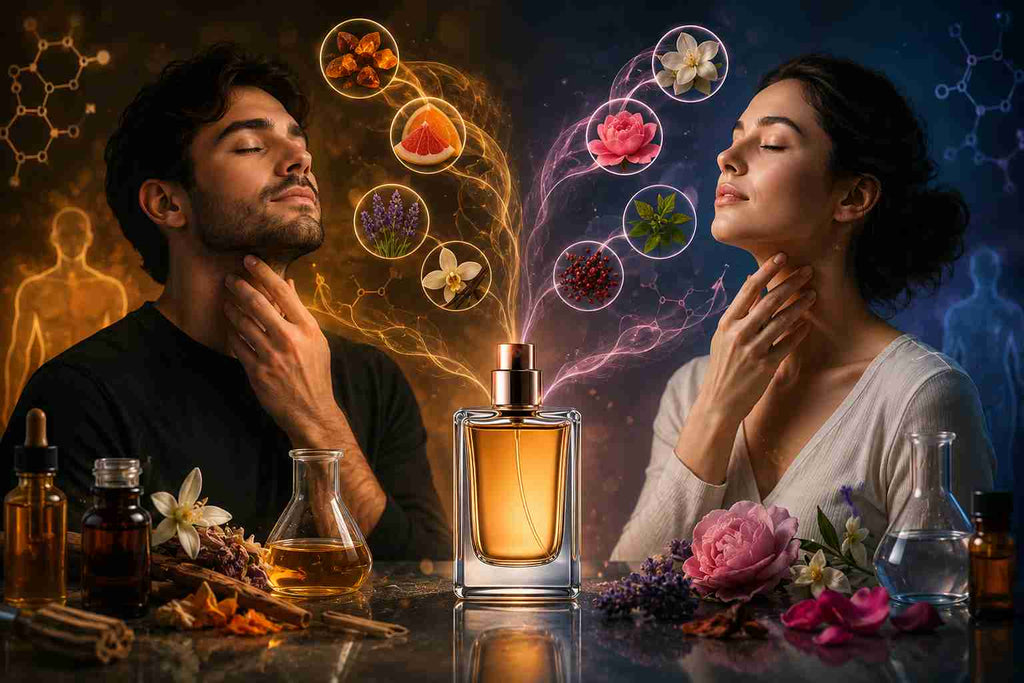
Why Two People Experience the Same Perfume Differently
Why Does the Same Perfume Smell Different on Two People?
Have you ever recommended your favorite perfume to a friend, only to find that it smelled completely different on them? This is one of the most fascinating aspects of fragrance. The perfume hasn't changed—your body has.
Every person's skin has its own unique chemistry, which influences how a fragrance develops, projects, and lasts throughout the day. Factors such as skin type, body temperature, hydration, hormones, diet, and even the environment all affect the way a perfume performs.
If you've ever wondered why the same Long Lasting Perfume can smell sweet on one person, fresh on another, and woody on someone else, this guide explains the science behind it. Understanding these differences can also help you choose the Best Perfume for your body and improve Perfume Longevity.
How Perfume Actually Works
A perfume is not a single scent. It is made up of layers known as Fragrance Notes, which unfold over time.
Top Notes
These are the first scents you notice immediately after applying perfume. They are light, fresh, and usually disappear within 15 to 30 minutes.
Examples include:
- Bergamot
- Lemon
- Orange
- Grapefruit
- Mint
Heart Notes
After the top notes fade, the heart notes become more noticeable. They define the main personality of the fragrance.
Popular heart notes include:
- Rose
- Jasmine
- Lavender
- Cinnamon
- Cardamom
Base Notes
Base notes are the longest-lasting part of a fragrance and are responsible for its depth and richness.
Common base notes include:
- Oud
- Amber
- Musk
- Sandalwood
- Vanilla
- Patchouli
These layers react differently depending on your Skin Chemistry, which is why every fragrance tells a slightly different story on different people.
What Is Skin Chemistry?
Skin Chemistry refers to the natural characteristics of your skin that influence how perfume interacts with it.
These characteristics include:
- Natural skin oils
- Moisture levels
- Skin pH
- Body temperature
- Sweat production
- Hormonal changes
Although the perfume formula stays the same, these factors affect how quickly fragrance molecules evaporate and how different Fragrance Notes are perceived.
Why the Same Perfume Smells Different on Everyone
1. Natural Skin Oils
Your skin naturally produces oils that blend with perfume.
People with oilier skin often find that fragrances:
- Last longer
- Smell richer
- Project more strongly
On dry skin, perfume may evaporate faster, making the scent lighter and reducing Perfume Longevity.
Fragrance Tip
Apply an unscented moisturizer before spraying perfume. Hydrated skin helps hold fragrance for longer.
2. Skin pH
The pH level of your skin can subtly change how certain fragrance ingredients are perceived.
For example:
- Citrus notes may smell brighter on one person.
- Floral notes may become softer on another.
- Woody notes may appear deeper on someone else.
This is why testing a perfume on your own skin is more reliable than judging it from a paper tester.
3. Body Temperature
Heat plays an important role in fragrance performance.
Warmer skin encourages fragrance to evaporate more quickly, allowing the different Fragrance Notes to develop faster.
People with cooler skin may notice:
- A softer scent
- Slower fragrance development
- Less projection
4. Skin Hydration
Hydrated skin provides a better surface for fragrance oils to cling to.
Dry skin absorbs perfume more quickly, causing it to fade sooner.
If you want a Long Lasting Perfume experience:
- Moisturize daily.
- Apply perfume immediately after moisturizing.
- Choose an Eau De Parfum, which contains a higher concentration of fragrance oils.
5. Hormones
Hormonal changes can influence body chemistry and affect how perfume smells.
Changes related to:
- Stress
- Menstrual cycles
- Pregnancy
- Aging
may alter the way certain fragrance notes develop.
This is one reason why a favorite perfume may smell slightly different over time.
6. Diet and Lifestyle
What you eat and how you live can also affect your body's natural scent.
Foods such as:
- Garlic
- Onion
- Spicy dishes
- Alcohol
may subtly influence body odor, which can interact with perfume.
Hydration, exercise, and overall health also contribute to fragrance performance.
7. Weather and Climate
The surrounding environment changes how perfume behaves.
Summer
Heat makes fragrances project more strongly but may reduce Perfume Longevity.
Fresh citrus, aquatic, and floral perfumes are often more comfortable in warm weather
Winter
Cold weather slows evaporation, allowing woody, amber, vanilla, and oud fragrances to develop gradually and last longer.
Why Perfume Lasts Longer on Some People
Some people naturally experience better Perfume Longevity because of:
- Oilier skin
- Better skin hydration
- Cooler environments
- Slower evaporation
- Choosing high-quality Eau De Parfum
These factors allow fragrance molecules to remain on the skin for a longer period.
How to Choose the Best Perfume for Your Skin
Finding the Best Perfume isn't just about choosing a scent you like. It's also about selecting one that works well with your skin.
For Dry Skin
Choose:
- Rich oriental fragrances
- Vanilla
- Amber
- Musk
- Oud
These scents often provide better longevity.
For Oily Skin
Fresh fragrances perform exceptionally well because natural oils help extend their wear.
Good options include:
- Citrus
- Floral
- Fruity
- Green fragrances
Tips to Improve Perfume Longevity
Follow these simple Fragrance Tips to help your perfume last longer.
Apply After a Shower
Clean skin helps fragrance adhere more effectively.
Moisturize Before Spraying
An unscented lotion creates a smooth surface that helps perfume stay on the skin.
Spray Pulse Points
Apply perfume to:
- Wrists
- Neck
- Behind the ears
- Inner elbows
These warm areas encourage fragrance development.
Don't Rub the Perfume
Rubbing your wrists together can reduce the freshness of the top notes.
Allow the perfume to dry naturally.
Wear Eau De Parfum
An Eau De Parfum generally lasts longer than lighter fragrance types because it contains a higher concentration of fragrance oils.
Store Your Perfume Properly
Keep perfume:
- Away from direct sunlight
- In a cool, dry place
- Inside its original box
Proper storage helps preserve fragrance quality.
Common Myths About Perfume and Skin Chemistry
Myth: Perfume Smells the Same on Everyone
False. Individual Skin Chemistry makes every fragrance unique.
Myth: Expensive Perfume Always Lasts Longer
Not always. Longevity depends on fragrance concentration, ingredients, application, and your skin type.
Myth: More Sprays Mean Better Performance
Using too much perfume can overwhelm the senses without significantly improving longevity. Applying the right amount to pulse points is usually more effective.
Final Thoughts
The reason two people experience the same perfume differently comes down to Skin Chemistry. Factors such as natural oils, hydration, body temperature, hormones, diet, and climate all influence how Perfume on Skin develops over time.
Instead of searching for a fragrance that smells good on someone else, choose one that complements your own skin. Testing a perfume before purchasing, moisturizing regularly, and selecting a high-quality Long Lasting Perfume in an Eau De Parfum concentration can help you enjoy a fragrance that feels truly personal.
Remember, the Best Perfume is not just the one that smells amazing in the bottle—it's the one that evolves beautifully on your skin and stays with you throughout the day.